As a college student, I have always been interested in travel and geography. Whenever I visit a new city, I like to observe how people live, how traffic moves, and how different areas are connected. A few years ago, I visited a large city for the first time. The crowded roads, tall buildings, busy markets, and endless flow of people made me realize how huge some cities can be.
That experience encouraged me to learn more about the largest cities in the world. I discovered that some cities have populations larger than many countries. These cities are often called "mega cities" because millions of people live and work there every day. While reading about them, I was amazed by their size, culture, and importance.
What Makes a City One of the Largest in the World?
When we talk about the largest cities in the world, we usually refer to the population living in the urban area or metropolitan region. Some cities have more than 20 or even 30 million people. These cities continue to grow because they offer jobs, education, business opportunities, and better transportation facilities. According to recent urban population estimates, several cities in Asia dominate the list of the world's largest urban areas.
Large cities often have airports, metro systems, highways, universities, shopping centers, and business districts that attract people from different parts of the country.
Tokyo, Japan
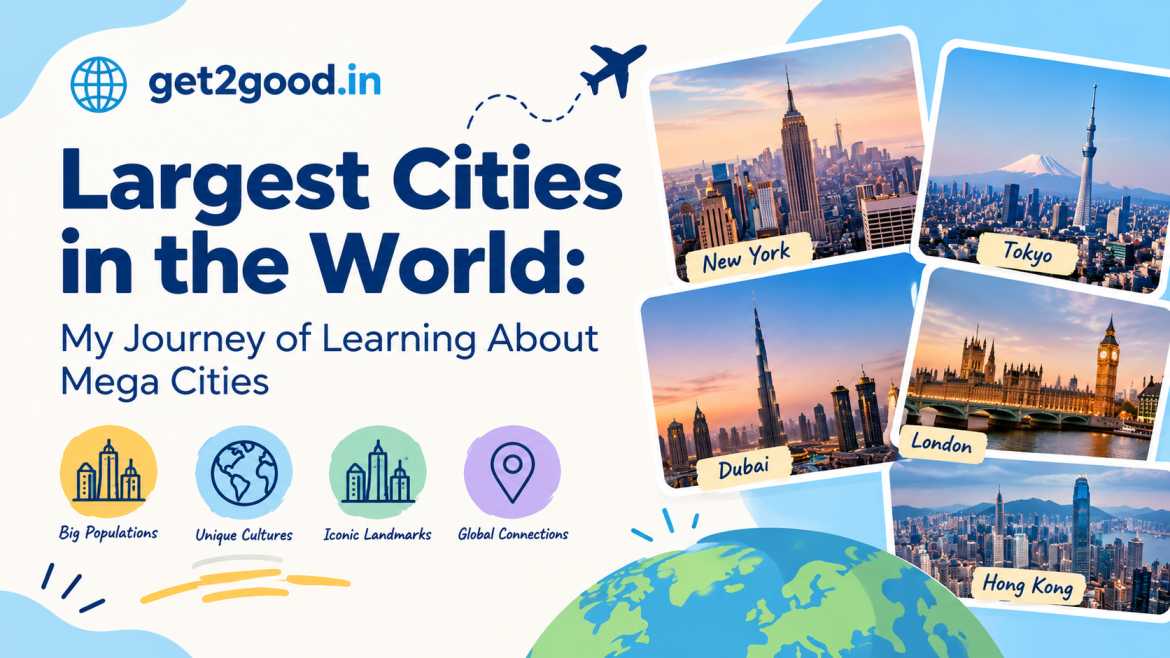
Tokyo is often considered one of the largest urban areas in the world. The city is famous for its modern technology, clean streets, efficient public transport, and impressive skyline. Various population studies estimate that the greater Tokyo area has more than 30 million residents, making it one of the world's biggest urban regions.
Whenever I watch videos about Tokyo, I am impressed by how organized everything looks. Even though millions of people live there, trains arrive on time and public spaces remain clean. The city is a great example of how a large population can be managed efficiently.
Tokyo is also known for its culture, food, shopping districts, and world-famous landmarks. For many travelers, visiting Tokyo feels like stepping into the future.
Delhi, India
Delhi is one of the largest cities in India and among the largest urban areas in the world. The Delhi metropolitan region has a population of over 30 million people according to recent estimates.
As an Indian student, Delhi feels familiar because it combines history and modern development. The city is home to famous places such as India Gate, Red Fort, Qutub Minar, and many government buildings.
Delhi is also an important center for education, business, and politics. Every year, thousands of students move to Delhi for higher studies and career opportunities. The city has an extensive metro system that helps millions of people travel daily.
Shanghai, China
Shanghai is one of China's most important cities and one of the largest urban centers in the world. The city has a population of nearly 30 million people in its wider urban area.
The first thing that attracts attention in Shanghai is its skyline. Modern skyscrapers, advanced transportation systems, and busy business districts make it one of the most developed cities in Asia.
When I see photographs of Shanghai at night, the city looks stunning. Bright lights reflect on the river, and the tall buildings create a beautiful view. Shanghai plays a major role in global trade and finance, making it one of the world's leading economic centers.
Jakarta, Indonesia
Jakarta is the capital of Indonesia and is frequently listed among the largest urban areas in the world. Some recent estimates place its urban population above 40 million people when the wider metropolitan area is included.
The city is known for its busy streets, diverse culture, and strong economy. Jakarta attracts people from different regions of Indonesia who move there in search of better jobs and opportunities.
Although Jakarta faces challenges such as traffic congestion, it continues to grow and remains one of Southeast Asia's most important cities.
Dhaka, Bangladesh
Dhaka is another rapidly growing mega city. It is the capital of Bangladesh and one of the most densely populated urban areas in the world. Recent estimates show that its metropolitan population is well above 30 million people.
Dhaka plays an important role in Bangladesh's economy, education, and culture. The city is known for its busy markets, colorful streets, and energetic atmosphere.
Many people move to Dhaka every year for employment and education. Because of this continuous growth, the city is expanding rapidly and developing new infrastructure projects.
Why Large Cities Are Important
Large cities are often the economic engines of their countries. They create jobs, attract businesses, and support industries such as technology, finance, tourism, education, and manufacturing.
Many of the world's best universities, largest companies, and busiest airports are located in major cities. These cities also serve as transportation hubs that connect different regions and countries.
For students, large cities offer access to better educational opportunities, libraries, internships, and career options. This is one reason why young people from smaller towns often move to big cities.
Challenges Faced by Mega Cities
While large cities provide many opportunities, they also face several challenges. One common problem is traffic congestion. When millions of people travel daily, roads can become crowded.
Housing is another challenge. As more people move into a city, demand for homes increases. This can make housing more expensive.
Pollution, waste management, and pressure on public transportation are also common issues. City planners continuously work on improving infrastructure to support growing populations.
Despite these challenges, many large cities continue to invest in metro systems, smart technology, green spaces, and sustainable development projects.
Learning about the largest cities in the world has been both interesting and educational for me. Before researching this topic, I mainly thought about cities as places with buildings and roads. However, I now understand that mega cities are complex systems that support millions of people every day.
Tokyo impressed me with its organization, Delhi with its history and importance, Shanghai with its modern skyline, Jakarta with its scale, and Dhaka with its rapid growth. Each city has its own unique character and story.
As someone who enjoys learning about travel and geography, I hope to visit some of these cities in the future. Exploring different cultures and seeing these mega cities in person would be an unforgettable experience. Until then, reading about them helps me better understand how cities shape the modern world.